
Use It Tomorrow: Build Independence With Rules and Procedures One at a Time
Jul 24, 2026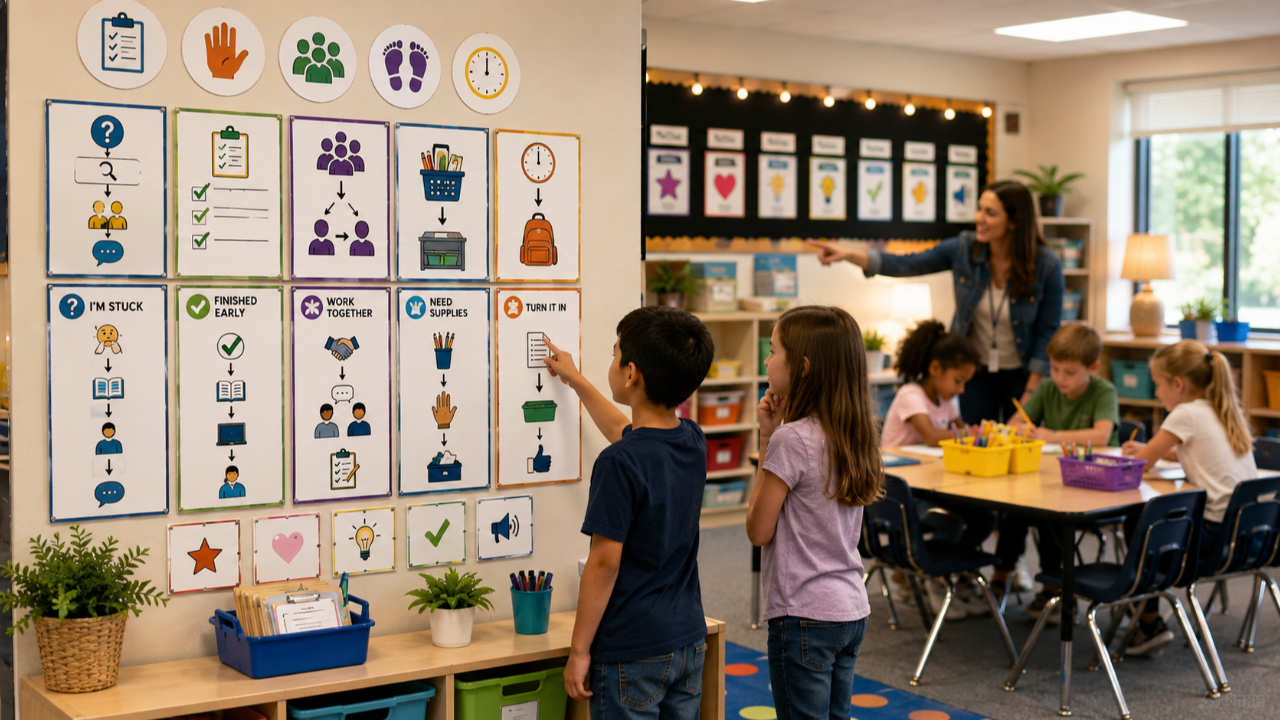
Every teacher has at least one classroom procedure that never seems to stick.
No matter how many times you've explained it, someone still asks what to do when they're finished. Another student heads straight to you for help before trying anything independently. A transition you've practiced multiple times somehow turns into organized chaos.
It's easy to assume students just aren't listening. Sometimes that's true. More often, though, students simply haven't had enough opportunities to learn, practice, and internalize the procedure.
To understand why, it helps to distinguish between rules, procedures, and routines. Rules communicate what matters by establishing the shared expectations that support learning. Procedures show students exactly what to do in specific situations. Routines develop over time as students repeatedly practice those procedures until they become part of the normal rhythm of the classroom.
For example, "Be responsible" is an important classroom rule, but it doesn't tell students what to do when they get stuck, finish early, need supplies, or want feedback. Those situations require clear procedures that students can practice until they become familiar routines.
The Marzano Academies CBE Instructional Model reminds us that effective classroom management involves much more than creating a list of rules at the beginning of the year. Design Area VII emphasizes three ongoing teacher actions: establishing clear rules and procedures, acknowledging when students follow them, and responding consistently when they don't. Together, these elements help create classrooms where students rely less on the teacher and more on the systems that support their learning.
The good news is that strengthening classroom procedures doesn't require an entirely new management plan. Often, a few intentional adjustments can make tomorrow's lesson feel much smoother than today's.
Let's look at three simple places to start.
1. Don't Keep the Directions in Your Head (VIIe)
Every classroom has predictable moments when students need guidance.
- They get stuck.
- They finish early.
- They need supplies.
- They aren't sure what comes next.
If students always need to ask you what to do, the procedure probably lives in your head instead of somewhere they can access independently.
One of the easiest ways to solve this problem is by creating simple visual anchor charts or Standard Operating Procedures (SOPs). Whether it's a short checklist or a decision-making flowchart, these tools give students somewhere to look before they look to you. Over time, those procedures become part of the classroom's shared language and eventually become routines students follow automatically.
Quick, proactive starting point: Think about one question you answer repeatedly every day. Instead of answering it again tomorrow, create a simple visual that answers it for students. It might be an SOP for what to do when they're stuck, how to request feedback, or where to go after finishing an assignment.
2. Catch Students Using the Procedure (VIIc)
Teachers naturally notice when students forget procedures. It's much harder to notice when they're quietly using them successfully.
Instead of offering a general, "Good job," try naming the specific procedure you observed.
"I noticed your group checked the 'What Do I Do When I'm Stuck?' chart before asking me for help."
"Thank you for following our collaboration procedure. Your group stayed focused and kept everyone involved."
These acknowledgments do more than recognize positive behavior. They reinforce the procedures you're hoping students will repeat. As those procedures become familiar, they gradually develop into routines that require less prompting from the teacher.
Quick, proactive starting point: Challenge yourself to give five specific acknowledgments tomorrow. Instead of saying, "Nice job," name the exact procedure the student used successfully.
3. Let the Procedure Do the Teaching (VIId)
No classroom procedure works perfectly every time. Students will forget. They'll skip steps. They'll make mistakes. When that happens, it's tempting to solve the problem yourself or repeat the directions once again.
Instead, redirect students back to the established procedure. This subtle shift moves students from depending on the teacher to taking responsibility for using the systems already in place. Rather than saying, "What are you doing?" try asking, "What's our procedure when we finish early?"
Instead of immediately answering a question, point students toward the anchor chart or SOP you've already created. When correction is needed, keep it calm, consistent, and connected to the established procedure—not your frustration. Over time, students learn that these procedures are reliable tools they can depend on rather than directions they only follow when the teacher reminds them.
Quick, proactive starting point: The next time a student forgets a procedure, pause before stepping in. See if you can redirect them back to the posted procedure instead of providing the answer yourself.
One Small Change Can Make a Big Difference
Rules aren't meant to limit student independence. They're meant to establish the shared expectations that make independence possible. Procedures give students a clear path for meeting those expectations, and with enough practice, those procedures become routines they can rely on without constant reminders.
Choose just one procedure to strengthen this week. Make it visible. Practice it with students. Notice when they use it successfully. Calmly redirect them when they forget.
Those small teacher actions don't just improve classroom management. They gradually build the independence, responsibility, and confidence that competency-based classrooms are designed to develop.
To continue building your understanding of Design Area VII and the full Marzano Academies instructional model, become a member of the Learning Lab. For only $10 per month, Members can access Dr. Marzano’s research folios, professional learning resources, and practical tools designed to help teachers make competency-based practices work in real classrooms. The Learning Hub also includes Badging Experiences that allow teachers to identify a meaningful professional growth goal, strengthen their classroom routines, and document their growing expertise. Teachers should own their professional learning, and the Learning Hub is built to support that work. You can also sign up for Virtual Office Hours or engage in a CBE Coaching Series with Marzano Academies Faculty to deepen your team’s approach to a personalized, competency-based classroom. Please reach out with any questions.