Use It Tomorrow: Answer the Question Once
Sep 04, 2026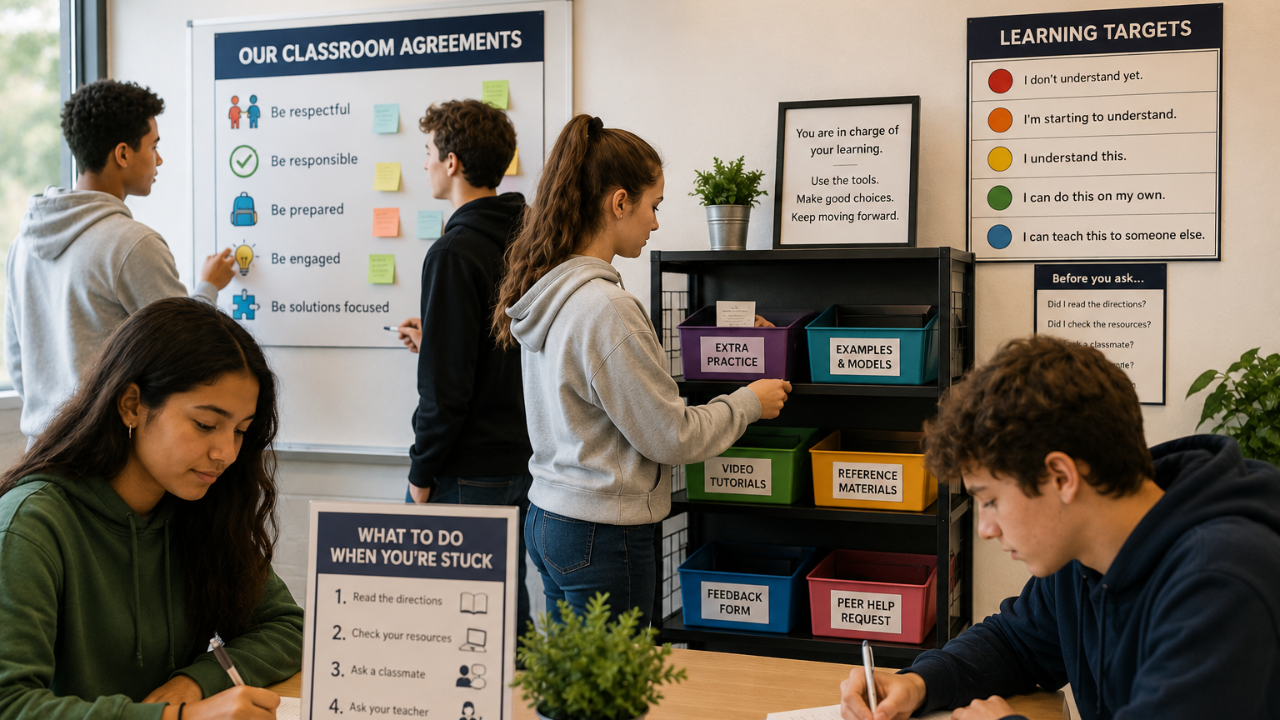
Every teacher has had one of those days. The first student asks, "What do I do when I'm finished?" A few minutes later someone else raises a hand. "Can you help me?" Then comes, "Is this enough?" "What page are we on?" "Can I work with someone?" "What should I do next?"
None of the questions are particularly difficult, but by the end of the lesson, you realize something: you haven't just been teaching the content. You've been functioning as the classroom's GPS. Every decision, every obstacle, and every next step has been routed through you.
It's exhausting.
More importantly, beyond the exhaustion, it creates a classroom where students become increasingly dependent on the very person trying to help them become independent. The irony is that most of us didn't create this on purpose.
We've spent years being praised for being responsive, supportive, and available to our students. Those are good things. But somewhere along the way, many students learned that the fastest path forward wasn't to think—it was to ask the teacher.
In a competency-based classroom, that approach eventually becomes a barrier. Students are expected to monitor their own progress, use feedback, decide what to practice next, seek support when they truly need it, and make thoughtful decisions about how they will demonstrate learning. Those aren't simply academic skills. They're habits of independent learners.
Research consistently supports this idea. Student agency develops when learners repeatedly make decisions, experience the results of those decisions, receive feedback, and adjust what they do next. Teachers don't hand students agency. They intentionally create opportunities for students to practice it.
Where the Marzano Academies Instructional Model Fits
The Marzano Academies Competency-Based Instructional Model addresses this through Design Area IX: Efficacy and Agency, specifically Element IXb: Enhancing Student Agency.
Rather than asking teachers to simply give students more freedom, Element IXb encourages teachers to gradually shift appropriate responsibility to learners. Students begin developing the habits of agency by learning how to solve problems, make decisions, contribute ideas, establish classroom systems, and connect today's work to who they hope to become. To learn more about element IX and the research behind it, check out this recent Learning Hub blog entry.
Agency isn't something students either have or don't have. Like reading, writing, or solving equations, it develops over time through intentional instruction and repeated opportunities to practice. The most important word in all of that is develop.
Fortunately, you don't have to redesign your classroom tomorrow. Sometimes agency begins with answering one less question—and, in return, teaching students how to answer it themselves. The following Use It Tomorrow strategies are designed to help teachers begin shifting responsibility for high-frequency classroom decisions from the teacher to the students, one small step at a time.
Use It Tomorrow #1: Stop Being the Classroom GPS
Think about the questions you answer over and over every day.
- "What do I do if I'm stuck?"
- "Where do I turn this in?"
- "Can I start the next activity?"
Most of those questions aren't really about content; they're about classroom procedures. Every time we immediately answer them, we're certainly helping students move forward. But we're also reinforcing the idea that every pathway runs through us. Instead, begin noticing the questions that repeat. If the same question surfaces every day, chances are the classroom needs a system, not another answer.
That's one of the central ideas behind Element IXb. Students become more independent when common decisions become visible, predictable, and accessible rather than living only inside the teacher's head. Whether it's a flowchart, a posted routine, or a collaboratively developed process, every system you create gives students one more opportunity to solve a problem without waiting for you.
Quick Proactive Starting Point
Tomorrow, keep a sticky note in your pocket. Every time you answer the same procedural question more than once, make a tally mark. At the end of the day, look at the question with the most tallies. That process needs a standard operating procedure chart so students can find the answer without needing your attention.
Use It Tomorrow #2: Replace Answers with Better Questions
One of the quickest ways to build independence is surprisingly simple: answer fewer questions.
Not because students don't deserve help, but because they deserve the opportunity to think first. Imagine the difference between these two exchanges.
“What should I do next?"
"Start page 42."
The thinking ends.
Now try this.
"What are your options?"
"What does your proficiency scale tell you?"
"What have you already tried?"
Suddenly the student is doing the thinking. It is no longer the teacher's responsibility.
That doesn't mean every response should become a question. Students still need direct instruction, clarification, and support. But if every decision is made for them, they never develop confidence in making decisions for themselves. Agency grows one decision at a time.
Quick Proactive Starting Point
Challenge yourself to replace three answers tomorrow with thoughtful questions. Don't worry about getting it perfect. Just notice what happens when students realize you believe they're capable of finding the next step.
Use It Tomorrow #3: Make One Decision Belong to the Students
Sometimes we think agency requires massive changes. Choice boards. Independent projects. Completely personalized learning pathways. Those certainly have their place.
But agency usually begins much smaller. It begins when students regularly practice making decisions that actually matter. Perhaps they choose which example to tackle first. Maybe they decide whether they're ready for more practice or ready to gather evidence of learning. Perhaps they determine which resource would best help them overcome a specific obstacle. The decision itself isn't the point. Learning how to make good decisions is.
Every meaningful decision gives students another opportunity to ask themselves, "Why is this the best next step for me?" That's exactly the kind of thinking independent learners develop over time.
Quick Proactive Starting Point
Look at tomorrow's lesson and find one place where every student currently does exactly the same thing. Ask yourself: "Is there one meaningful decision students could make here without changing the learning goal?" If the answer is yes, let them practice making it.
One Final Thought
One day, your students will leave your classroom. When they do, they won't have you sitting beside them to answer every question, solve every problem, or tell them what comes next. That's why independence can't wait until the last week of school. It's built every time students learn how to make one more decision without depending on the teacher. Sometimes that means creating a better classroom routine. Sometimes it means responding with a question instead of an answer. Sometimes it means trusting students with a decision they've never been asked to make before. Students don't become independent because we finally step back. They become independent because we've spent weeks teaching them how to step forward.
To continue building your understanding of effective, evidence-based, competency-based instructional practices and the full Marzano Academies instructional model, become a member of the Learning Lab. For only $10 per month, Members can access Dr. Marzano’s research Folios, professional learning resources, and practical tools designed to help teachers make competency-based practices work in real classrooms. The Learning Hub also includes Badging Experiences that allow teachers to identify a meaningful professional growth goal, strengthen their classroom routines, and document their growing expertise. Teachers should own their professional learning, and the Learning Hub is built to support that work. You can also sign up for Virtual Office Hours or engage in a CBE Coaching Series with Marzano Academies Faculty to deepen your team’s approach to a personalized, competency-based classroom. Please reach out with any questions.