CPR Step Three: Record — Where Thinking Becomes Visible
Mar 06, 2026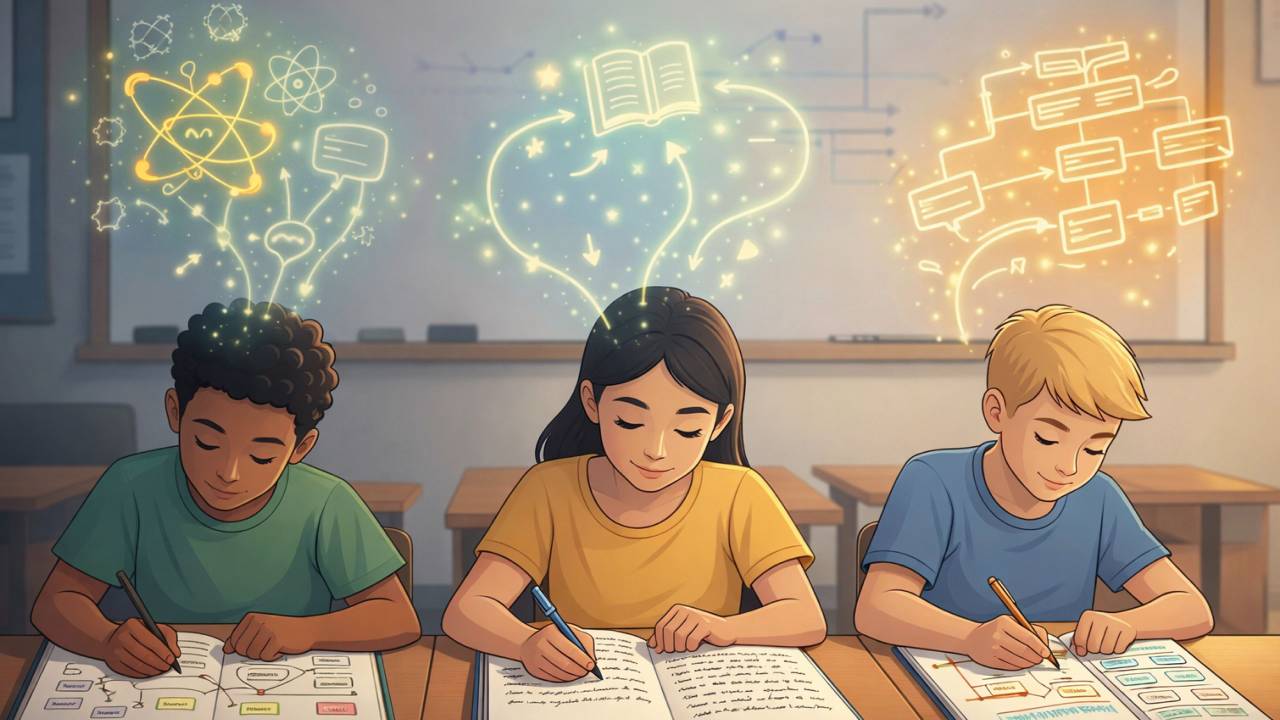
In previous blogs, we examined the first and second steps of the CPR model, Chunking and Processing, and continued exploring why cognitive engagement is essential for learning. Students must wrestle with new chunks of information, connect them to prior knowledge, and articulate emerging ideas. Without intentional planning for productive struggle, learning is a matter of luck.
But there is one final step that ensures those cognitive efforts endure. Students must record and represent their thinking. Processing activates understanding. Recording preserves it. Without this step, much of the thinking students do during processing fades quickly.
Cognitive science consistently demonstrates that learning becomes durable when students externalize their thinking through writing, drawing, organizing, or other representations of the ideas they are developing. This is why Recording and Representing Content is the third element in the Chunk–Process–Record (CPR) sequence of Design Area III of the Marzano Academies instructional model. When students record their thinking, they are not simply copying information. They are constructing a cognitive artifact of thought. They generate a visible representation of what they understand at that moment. And that artifact becomes the bridge between working memory and long-term memory.
What Recording Means in a Competency-Based Classroom
In the Marzano Academies instructional model, Element IIIc: Recording and Representing Content asks teachers to design opportunities for students to capture their understanding using both linguistic and nonlinguistic forms. This includes strategies such as:
- Academic notebooks
- Informal outlines and summaries
- Pictorial notes and diagrams
- Mnemonic devices
- Graphic organizers
These strategies require students to translate new knowledge into structures that make sense to them, thereby strengthening memory and understanding. In a competency-based classroom, recording and representing serve an additional purpose: they create visible evidence of student thinking. Students do not simply say they understand. They show it. A notebook entry, diagram, summary, or organizer becomes an artifact of thought that teachers can examine to determine how students are progressing along a proficiency scale. In CBE, anything a teacher can use to produce evidence of learning is an assessment of that learning.
Why Recording Matters: The Cognitive Science
The importance of recording and representing is supported by several well-established principles from cognitive science.
- Externalizing Thinking Reduces Cognitive Load
Working memory is limited. Cognitive Load Theory reminds us that learners can hold only a limited amount of information in their minds at any given time (Sweller, 1988). This capacity must also contend with environmental stimuli that compete for students’ attention and distract them from what we want them to focus on.
When students record ideas, they offload information from working memory into an external structure. This frees cognitive resources to analyze relationships, refine understanding, and build more complex schemas. Recording, therefore, is not simply documentation. It is cognitive scaffolding.
- Dual Coding Strengthens Memory
Allan Paivio’s Dual Coding Theory explains that information encoded both verbally and visually is far more likely to be retained (Paivio, 1986). This is why combining written notes with diagrams, symbols, or visual representations can dramatically improve recall. When students create pictorial notes, graphic organizers, or combination notes, they are engaging both the verbal and visual processing systems of the brain. The result is a stronger, more durable memory.
- Generative Note-Taking Deepens Understanding
Research on generative learning demonstrates that learning improves when students actively create representations of knowledge rather than passively record information (Fiorella & Mayer, 2015). Effective generative strategies require students to:
- identify key ideas
- organize relationships
- decide what matters
- translate ideas into new forms
These generative actions strengthen comprehension and retention. So do not have them copy your notes. Have them generate their own.
- Retrieval and Reconstruction Reinforce Learning
When students summarize or reorganize their thinking in notes, they are engaging in retrieval practice. Retrieval strengthens memory more effectively than rereading or passive review of your notes or highlights in a text (Roediger & Karpicke, 2006). Recording, therefore, becomes a powerful learning event because students must reconstruct the knowledge themselves.
What Recording Looks Like in Practice
Recording and representing are most powerful when they occur immediately after processing, while thinking is still active. Here are several common approaches described in the Marzano Academies framework.
Academic Notebooks
One of the most systematic ways to support recording is through academic notebooks. Students regularly record key ideas from a lesson, questions they still have, or summaries of learning. These notebooks create a running record of learning and allow students to revisit ideas across time.
Informal Outlines and Summaries
Outlining helps students organize ideas according to relative importance. For example, using a structure such as:
Main Idea
Supporting detail
Supporting detail
This structure forces students to distinguish between essential and supporting information, which improves comprehension.
Pictorial and Combination Notes
Students can represent ideas using drawings, symbols, or diagrams. For example:
- process diagrams
- concept maps
- pictographs
Combining text and visuals strengthens encoding by engaging the visual and verbal cognitive pathways.
Mnemonic Devices
Mnemonic strategies help students remember complex information by linking it to memorable patterns or images. Examples include acronyms (ROY G BIV), rhyming pegwords and visual imagery stories. These structures create mental cues that improve recall.
Graphic Organizers
Graphic organizers, known as Knowledge Maps in the Marzano Academies, allow students to represent relationships among ideas. Common structures include:
- sequence organizers
- comparison charts
- cause-and-effect diagrams
- classification maps
- problem-solution charts
These organizers mirror the structures of knowledge itself, helping students understand how ideas connect.
The Critical Distinction: Notes vs. Represented Thinking
A classroom can ask students to “take notes” and still miss the purpose of recording. If students simply copy what the teacher says, very little cognitive work occurs. Recording becomes powerful only when students must:
- decide what matters
- organize ideas
- translate concepts
- construct their own representations
In other words, recording must capture thinking, not transcription. When students create their own summaries, diagrams, or organizers, the act of construction strengthens learning.
Recording in a Competency-Based System
In a competency-based classroom, recording and representing serve a second critical purpose: they create evidence of learning. Teachers can examine student artifacts to determine what concepts students understand, what misconceptions remain, and a student’s status in the learning progression represented in the proficiency scale
Students themselves can also use these artifacts to monitor their progress. Their notebooks become a visible record of ideas they have mastered, concepts they are still refining, and connections they are beginning to see
Recording, therefore, supports both learning and assessment.
The Question That Should Guide Us
When planning a lesson, teachers often ask: “How will students engage with this content?” But a more powerful question is, “What will students produce that demonstrates their thinking?” If students process but never record their thinking, the learning may disappear as quickly as it appeared. But when students capture their ideas in words, diagrams, and representations, those ideas begin to take root.
In CPR, the final step ensures that cognitive engagement leaves a trace. And those traces, whether they are notes, diagrams, summaries, or organizers, become the building blocks of lasting knowledge.
To continue building your understanding of recording and representing knowledge, you may want to explore one of the Learning Hub’s Badging Experiences or subscribe to the Learning Lab for access to professional development resources, including Dr. Marzano’s research folios for each element and a community of educators working to make their classrooms centered on competency-based practices. These resources are designed to help you identify a meaningful professional growth goal and develop a clear plan for strengthening your practice. As we often say, teachers should own their professional learning.
In Next week’s Use-It-Tomorrow blog, we will share additional strategies to support the principles of recording and representing in your classroom.
References
Bjork, R. A., & Bjork, E. L. (2011). Making things hard on yourself, but in a good way: Creating desirable difficulties to enhance learning.
Fiorella, L., & Mayer, R. E. (2015). Learning as a Generative Activity. Cambridge University Press.
Marzano, R. J. (2019). The New Art and Science of Teaching.
Marzano Academies. (2021). Competency-Based Education Folio Series: Element IIIc – Recording and Representing Content.
Paivio, A. (1986). Mental Representations: A Dual Coding Approach.
Roediger, H. L., & Karpicke, J. D. (2006). Test-enhanced learning: Taking memory tests improves long-term retention.
Sweller, J. (1988). Cognitive load during problem solving.