
Why Chunking Matters: The Cognitive Science Behind How Students Learn
Feb 05, 2026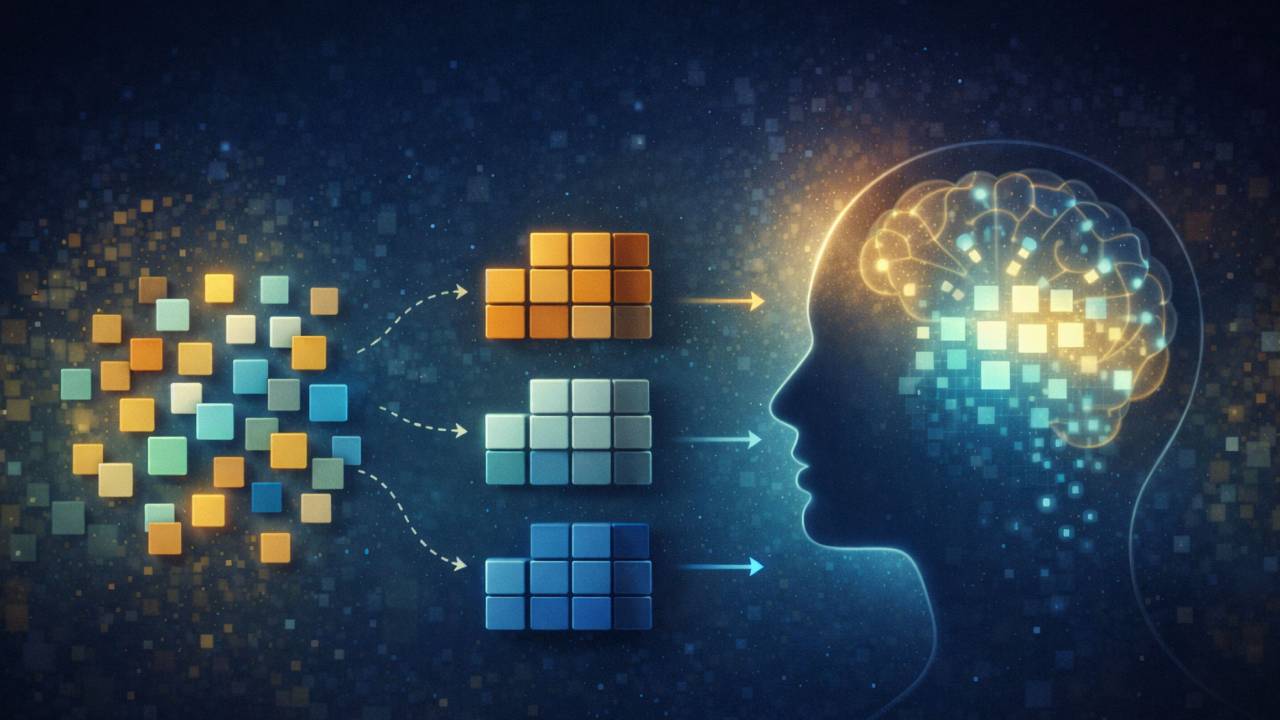
We continue our series on CPR – what keeps cognitive engagement alive in the classroom with a deeper look at chinking. Chunking is often misunderstood as simply “breaking lessons into smaller parts.” In reality, chunking is a cognitive design decision. One that determines whether students are able to acquire, encode, and later retrieve the knowledge they need for deeper learning.
Within the Marzano Academies Instructional Model, chunking is not an instructional preference; it is a necessity. Without intentional chunking, even well-designed lessons risk overwhelming students’ working memory and undermining the very learning they aim to support.
Chunking Through the Lens of the Marzano Academies Instructional Model
Dr. Robert Marzano’s research makes clear that students must first acquire foundational knowledge before they can engage in higher levels of cognitive complexity. In Design Area III, Proficiency Scale Instruction, Marzano emphasizes that teachers must present new information in ways that are manageable, coherent, and aligned to what students are expected to know and be able to do (Marzano, 2021).
The Element IIIa folio on Chunking Content describes chunking as the deliberate organization and sequencing of information so that learners can process critical content without cognitive overload. Rather than presenting all ideas at once, teachers are encouraged to:
- Identify essential information
- Present it in logical groupings
- Pause instruction to allow processing before moving forward
This approach reflects a fundamental understanding of how memory works: learning is constrained by working memory.
Why the Brain Requires Chunking
Cognitive science has long established that working memory is limited in both capacity and duration. Early research by George Miller suggested that individuals can hold only a small number of items in working memory at once, a finding later refined by researchers such as Nelson Cowan (Cowan, 2001). When instruction exceeds that capacity, information is lost before it can be encoded into long-term memory.
John Sweller’s Cognitive Load Theory further clarifies this issue. Sweller argues that instruction must be designed to minimize extraneous cognitive load so that learners can devote their limited cognitive resources to what actually matters (Sweller, Ayres, & Kalyuga, 2011). Chunking by its very nature reduces unnecessary cognitive burden and focuses attention on essential content.
From this perspective, chunking is not about pacing alone; it is about protecting cognitive resources so learning can occur.
Proficiency Scales as a Natural Structure for Chunking
One of the most powerful, but often underutilized, supports for chunking already exists in competency-based classrooms: proficiency scales.
Marzano proficiency scales clearly articulate:
- Scale Level 2.0: the essential vocabulary, facts, and processes students must acquire
- Scale Level 3.0: the target level of understanding or skill
- Scale Level 4.0: opportunities for extension and transfer
Because Scale Level 2.0 identifies the foundational knowledge required for success, it provides a natural roadmap for chunking instruction. Teachers are not guessing what to include. The critical content has already been named.
Effective chunking, then, often involves:
- Breaking Scale Level 2.0 content into smaller, coherent instructional segments
- Sequencing those segments intentionally
- Ensuring students process and record each chunk before moving on
In this way, proficiency scales do more than clarify expectations. They operationalize cognitive science by aligning instruction to how students actually learn.
Chunking as a Prerequisite for Generative Learning
Researchers studying generative learning emphasize that students must actively make sense of information in order to learn it (Fiorella & Mayer, 2016). However, generative learning cannot occur if students lack the necessary knowledge to generate meaning in the first place. This is the argument that lies behind discovery learning and why it struggles to produce outcomes.
Stanislas Dehaene (2020) cautions against instructional approaches that expect students to “rediscover” complex ideas without sufficient guidance. Without properly chunked instruction, discovery becomes cognitively overwhelming rather than intellectually productive.
Chunking ensures that:
- Students have access to the knowledge needed to think
- Processing activities are focused rather than diffuse
- Discovery tasks build on a stable foundation instead of fragile recall
In this way, chunking is what makes student-centered learning possible.
Chunking as a Design Habit, Not a Technique
When chunking is treated as a one-off strategy, its impact is limited. When it is treated as a daily design habit, it reshapes instruction.
Teachers who consistently chunk with intention:
- Talk less, but design more
- Prioritize clarity over coverage
- Create space for thinking instead of rushing to activity
As Marzano’s work consistently shows, effective instruction is not about doing more. It is about doing what matters most, in the right sequence, at the right time.
Chunking is where that discipline begins.
To continue building your understanding of chunking, you may want to explore one of the Learning Hub’s Badging Experiences or subscribe to the Learning Lab for access to professional development resources, including Dr. Marzano’s research folios for each element and a community of educators working to make their classrooms centered on competency-based practices. These resources are designed to help you identify a meaningful professional growth goal and develop a clear plan for strengthening your practice. As we often say, teachers should own their professional learning.
References
Marzano, R. J. (2021). Competency-based education folio series: Element IIIa—Chunking content. Marzano Academies.
Cowan, N. (2001). The magical number 4 in short-term memory: A reconsideration of mental storage capacity. Behavioral and Brain Sciences, 24(1), 87–114.
Dehaene, S. (2020). How we learn: Why brains learn better than any machine… for now. Viking.
Fiorella, L., & Mayer, R. E. (2016). Learning as a generative activity: Eight learning strategies that promote understanding. Cambridge University Press.
Sweller, J., Ayres, P., & Kalyuga, S. (2011). Cognitive load theory. Springer.