
CPR for Learning: How Chunk, Process, and Record Keep Cognitive Engagement Alive
Jan 23, 2026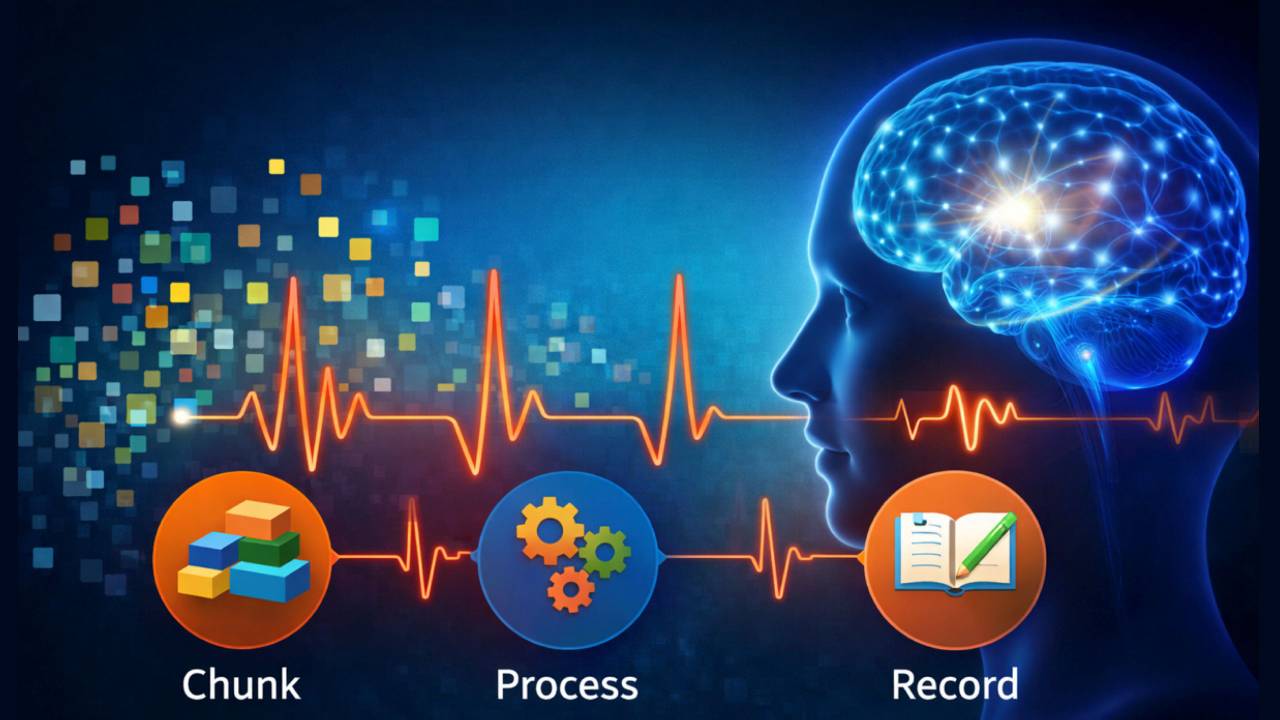
One of the most persistent challenges in classrooms is not motivation or compliance—it is cognition. Students may appear attentive, compliant, and busy, yet still fail to develop the durable knowledge required for deeper thinking, transfer, and student-led discovery. We have covered that in length in the last eight blogs. The issue is rarely effort; more often, it is design. Specifically, it is the absence of a deliberate structure that helps learners acquire, encode, and retrieve foundational knowledge.
This is where Chunk–Process–Record (CPR) becomes essential.
CPR is not a strategy in isolation, nor is it a rigid instructional script. It is a coherent instructional sequence that keeps learning alive by ensuring students do more than listen. They must actively construct knowledge. When implemented intentionally, CPR becomes the first critical step in shifting from teacher-directed instruction to student-led discovery.
Why CPR Matters
Deeper learning is not possible without accessible knowledge. Students cannot analyze what they cannot recall, defend claims without conceptual grounding, or engage in meaningful inquiry without a foundation of accurately encoded information. Cognitive science is clear on this point: working memory depends on what is already stored in long-term memory. When students lack that stored knowledge, “higher-order thinking” becomes guesswork rather than reasoning. Too often, teachers want to jump directly to discovery and place learners in situations that overwhelm their working memory. As Stanislas Dehaene explains in How We Learn: Why Brains Learn Better Than Any Machine… for Now, “Should we be surprised by this? How could we imagine that children would rediscover, in a few hours and without any external guidance, what humanity took centuries to discern? At any rate, the failures are resounding in all areas” (Dehaene, 2020, p. 182).
CPR addresses this problem directly:
- Chunking ensures that new information is presented in manageable, meaningful segments rather than overwhelming streams of explanation.
- Processing requires students to actively make sense of those chunks by comparing, classifying, questioning, and connecting ideas.
- Recording anchors learning by requiring students to represent their thinking in ways that strengthen memory and retrieval.
Together, these elements prevent passive listening and replace it with intentional cognitive engagement.
Chunk: What Students Are Learning
Chunking is about clarifying what matters and delivering it in a way that ensures we are not overloading a learner’s working memory without providing time to process. Effective chunking identifies the critical content, facts, concepts, vocabulary, and processes that students must acquire before they can think deeply about a topic. Poor chunking leads to overload; strong chunking creates focus.
In CPR-aligned instruction, teachers are deliberate about:
- What information students need now
- What can wait
- Where pauses for thinking must occur
This is where teachers begin to stop “talking at” students and start designing learning.
Process: How Students Make Meaning
Processing is where cognition actually happens. It is not synonymous with discussion, nor does it require elaborate activities. Processing occurs whenever students are asked to do something mentally productive with new information. They identify patterns, explain relationships, test examples, or articulate understanding. This is the thinking time.
Without processing, chunked content remains inert. With it, information begins to transform into knowledge.
Record: How Learning Becomes Durable
Recording and representing learning is not note-taking for compliance. It is a cognitive act that forces students to translate ideas into personally meaningful representations. The notes can be written, visual, symbolic, or verbal. This translation strengthens memory, supports retrieval, and provides students with tangible evidence of their own learning. It also serves as evidence for the teacher to help determine the next instructional steps for learners who are not yet ready to do this on their own.
In competency-based classrooms, recording is especially powerful because it:
- Makes learning visible
- Supports student self-monitoring
- Creates artifacts that fuel reflection and revision
CPR as the Bridge to Student-Led Discovery
CPR is not the end goal. It is the bridge.
When students can reliably acquire, process, and record foundational knowledge, teachers can release responsibility with confidence. Inquiry, problem-based learning, and student-designed tasks stop being aspirational and become attainable because students have something to think with.
In this blog series, we will explore CPR through both theory and immediate classroom application:
- Why it works
- How teachers can implement it tomorrow without redesigning everything
- What to look for in your classroom to let you know it is working.
Cognitive engagement does not stay alive by accident. It is designed. CPR is how that design begins.
To continue building your understanding of these instructional elements, you may want to explore one of the Learning Hub’s Badging Experiences or subscribe to the Learning Lab for access to professional development resources, including Dr. Marzano’s research folios for each element and a community of educators working to make their classrooms centered on competency-based practices. These resources are designed to help you identify a meaningful professional growth goal and develop a clear plan for strengthening your practice. As we often say, teachers should own their professional learning.
References
Dehaene, S. (2020). How We Learn: Why Brains Learn Better Than Any Machine… for Now. Viking.